
By Sam Drysdale, State House News Service on September 22, 2026
This story was updated with 89 percent of Lenox 10th graders scoring as meets or exceeds on the MCAS English language arts exam.
BOSTON — Massachusetts students made little progress on this year's statewide MCAS exams, with reading and writing performance declining and raising questions about how schools and policymakers should respond.
The results released Tuesday show 40 percent of students in grades 3 through 8 met or exceeded expectations in English language arts, down 2 percentage points from 2025 and 12 points from 2019. In 10th grade ELA, the decline was substantially greater: 45 percent met or exceeded expectations, down 6 points from last year and 16 points from the pre-pandemic level.
Massachusetts has not restored its pre-pandemic performance in any major subject or student demographic group, and the sharp deterioration in 10th-grade ELA has added urgency to the debate over the fundamental reading and writing skills all students need in order to learn.
Across the Berkshires, the percentage of students in grades 3-8 meeting or exceeding the state average was generally near or higher than the state average across most districts, with a few scoring significantly below that threshold.
In Berkshire high schools, Mount Greylock, Lenox and Lee exceeded the statewide percentages of students testing at meets or exceeds standards — 45 percent for ELA and 44 percent for math.
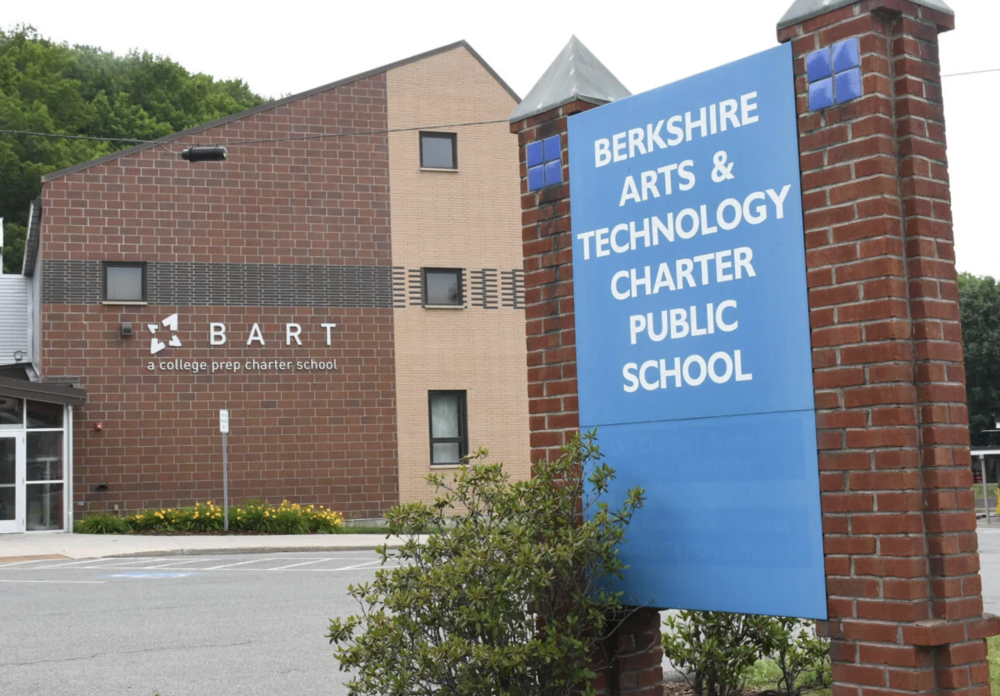
Berkshire Arts and Technology Charter Public School, Monument Mountain and Wahconah students beat the statewide percentages in English language arts, but not in math. The remaining high schools — Drury, McCann, Hoosac Valley, Pittsfield, Taconic and Mount Everett — fell short of that threshold on both tests.
Lenox turned in the county's best high school scores: 89 percent meets or exceeds in English, 75 percent in math.
The county’s urban districts, Pittsfield and North Adams, generally struggled, as did Hoosac Valley. All three reported meets-or-exceeds scores well below the statewide percentage in English and math for grades 3-8 and for grade 10.
The results leave state education officials confronting the lingering effects of the pandemic while also grappling with questions about students' motivation to take a test that is no longer required for graduation.
Massachusetts voters approved a 2024 ballot question removing the requirement that students earn a qualifying MCAS score to receive a high school diploma. MCAS tests are still administered, but the high school test is no longer tied to the state's competency determination for graduation.
Decisions about the graduation framework will play out in the next legislative session, and in the meantime the MCAS remains the state's primary statewide measure of student achievement, even as officials consider how the loss of its graduation stakes may affect how students approach the test.
There were bright spots throughout Berkshire County.
Berkshire Arts and Technology Charter Public School in Adams, Kittredge Elementary School in Hinsdale and Williamstown Elementary School were among 56 schools DESE named “schools of recognition,” thanks in large part due to their 2025 MCAS performance.
Central Berkshire Superintendent Michael Henault noted that last year’s third grade class at Kittredge — now in fourth grade — was in its second year of the district’s new early literacy curriculum. He credited Kittredge Principal Howie Marshall for advocating for a reading interventionist, and hailed teachers and paraprofessionals for their efforts.
“We feel great about where our district is ... the [CBRSD] schools that haven’t been recognized aren’t very far behind in the data,” Henault said. “We feel like everyone is rowing in the same direction.”
BART Executive Director Jonathan Igoe said the test results showed strength in ELA and middle school science, where test results went from 31 percent meets or exceeds in 2025 to 58 percent in 2026.
“It’s the progress that DESE’s seeing and the level of achievement at the high school level,” Igoe said. “The recognition goes to teachers who did this work every single day.”
It’s the second year in a row that the Central Berkshire and Mount Greylock school districts had schools honored. In 2025, Nessacus Middle School was honored as a school of recognition, while Lanesborough Elementary School was named a school of distinction.
Department of Elementary and Secondary Education Commissioner Pedro Martinez pointed to two factors behind the 10th-grade ELA decline: student motivation and weaker academic performance among students entering high school.
DESE data chief Rob Curtin cautioned against attributing the entire high school decline to motivation.
"There are multiple reasons, as the commissioner stated, for what's happened with our results in grade 10," Curtin said. "Certainly we would acknowledge the motivation factor, but also want to acknowledge the prior results of those students coming into high school."
Curtin said there was no evidence presented Tuesday that students were simply giving up on the test at a greater rate than last year.
Math results in grades 3 through 8 were flat overall, with 41 percent meeting or exceeding expectations, though sixth and eighth graders posted gains. High school math was also essentially flat at 44 percent at or above expectations. Science results were mixed, while eighth-grade civics remained flat at 40 percent.
Math highlights across the Berkshires included Lenox eighth graders, who went from 53 percent meeting or exceeding standards in 2025 to 70 percent meeting that threshold in 2026.
Third and eighth-graders in the Mount Greylock district also scored high in math. The district’s eighth graders made a remarkable increase from 28 percent meets or exceeds in 2025 to 61 percent in 2026.
For schools, the results mean the academic recovery from the pandemic remains incomplete.
Large numbers of students remain below state expectations, particularly students from low-income families, English learners and students with disabilities. For policymakers, the results add urgency to efforts already underway around literacy instruction, chronic absenteeism and new high school graduation standards.
"We're still not where we want to be in terms of our results," Martinez said. He said the state is seeing "stabilization in math," but not in literacy, particularly among high school students.
In grades 3 through 8 ELA, Asian students were at 62 percent meeting or exceeding expectations, down two points from 2025, while white students were at 48 percent, also down two points. Black students were flat at 25 percent, and Hispanic students were flat at 22 percent.
While every demographic group remained below its 2019 performance, Asian and white students' performance in ELA declined slightly while Black and Hispanic students remained flat — which Curtin said narrows some achievement gaps, but should not be interpreted as progress because it results from the higher-performing groups losing ground rather than lower-performing groups gaining.
Low-income students in grades 3 through 8 had a 22 percent meeting-or-exceeding rate in ELA, while students with disabilities were at 11 percent. English learners were at 4 percent.
Chronic absenteeism remains another significant factor.
The statewide chronic absenteeism rate improved from just under 19 percent in 2025 to 17.1 percent in 2026, according to Education Secretary Stephen Zrike, but remains above pre-pandemic levels. Curtin said chronically absent students in grades 3 through 8 scored roughly half an achievement level below their regularly attending peers in ELA and more than half an achievement level lower in math.
The administration is betting on several policy changes to address the results.
Zrike highlighted Literacy Launch, high-dosage tutoring, expanded early college and career technical education, and efforts to address student mental health. The state awarded nearly $24.7 million in August to 71 districts and an educational collaborative for evidence-based literacy instruction.
In June, Gov. Maura Healey signed legislation requiring districts to use research-backed K-3 reading curricula and strengthening literacy screening and teacher preparation requirements.
"We have significant work ahead to ensure that every student is prepared to thrive in college, career, and civic life," Zrike said.
The new high school graduation framework that the state is moving toward would establish broader expectations around coursework, career preparation, financial literacy, civics, artificial intelligence literacy and postsecondary planning, rather than relying on a single high-stakes test.
Martinez said those changes, along with the state's literacy efforts, are intended to address the academic declines reflected in the MCAS results.
"Our goal is to exceed or to actually be ahead of schedule on each of the different deadlines that are in the literacy bill," Martinez said.
The Legislature will ultimately have a role in determining how those proposals are implemented and funded, while schools will be responsible for translating the new literacy and graduation expectations into classroom practice.
Martinez said the state will establish a new "north star" for student achievement, with goals for grades 3 through 8 to reach new proficiency benchmarks by 2031 and reduce the number of students performing at the lowest achievement level. He plans to discuss the goals during Tuesday's Board of Education meeting.
"What makes me optimistic is that Massachusetts is a state that not only invests in education, but we truly collaborate," Martinez said. "I know that we can not only stabilize the data but reverse this trend."
Eagle News Editor Greg Sukiennik contributed to this report.